Table of Contents
The Automotive Landscape in 2026: Key Trends to Watch
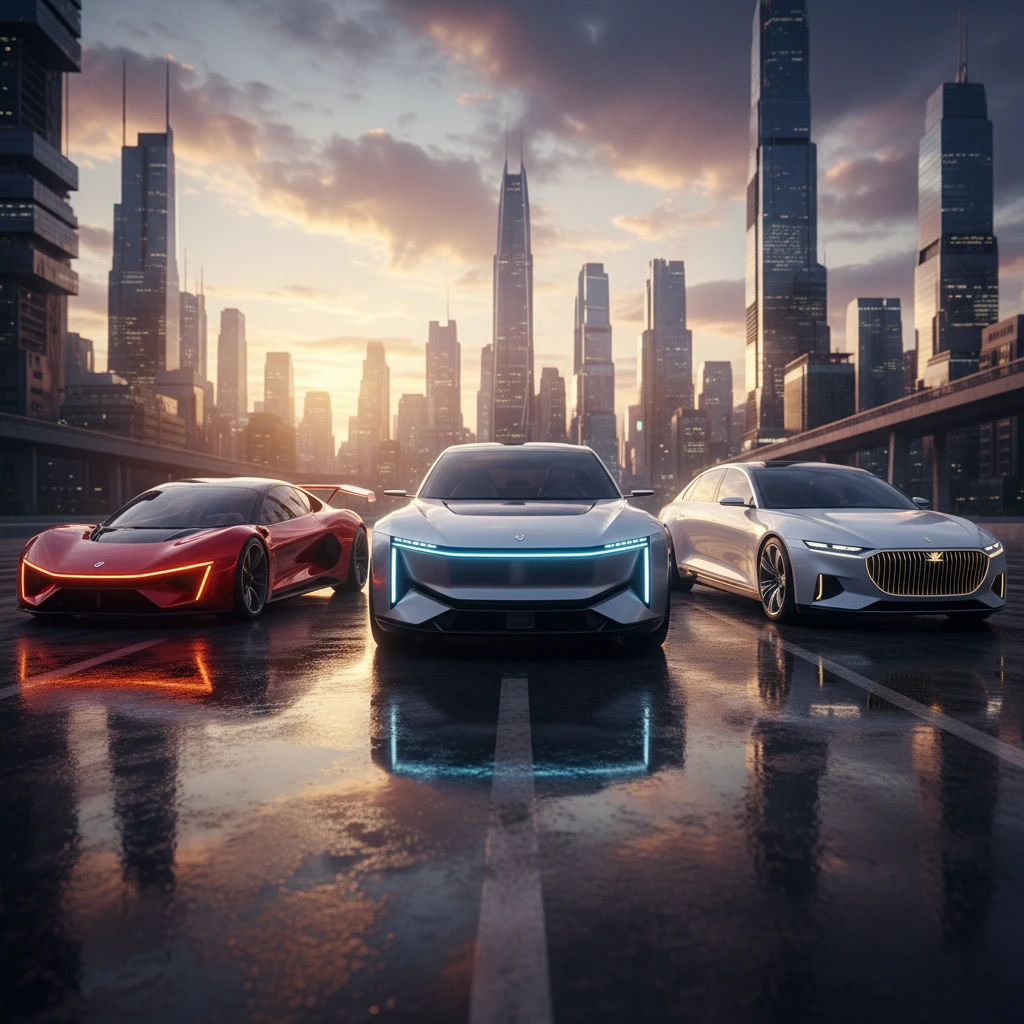
The year 2026 isn’t just another date on the calendar; it’s a milestone in automotive history. We’re standing at the confluence of electrification, artificial intelligence, and sustainable design, creating a new paradigm for what a car is and what it can do. The vehicles of 2026 are more than just transportation; they are intelligent, connected, and conscientious partners in our daily lives. Before we dive into our top picks, it’s crucial to understand the powerful trends shaping the cars you’ll be driving.
The Unstoppable Rise of Electric Vehicles (EVs)
The electric revolution is no longer a future promise; it’s the present reality. By 2026, the dominance of EVs will be undeniable, driven by significant technological leaps. The conversation is shifting from ‘if’ to ‘which one.’ We’re seeing the maturation of battery technology, with solid-state batteries beginning to enter niche luxury markets, promising faster charging times, greater energy density, and enhanced safety. For the mainstream market, lithium-ion technology continues to evolve, pushing the average EV range well past the 350-mile mark, effectively eliminating range anxiety for most drivers. Furthermore, the global charging infrastructure is expanding exponentially, with a focus on high-speed DC fast chargers that can add hundreds of miles of range in under 20 minutes. Government incentives and stricter emissions regulations continue to accelerate this transition, making EVs not just an environmental choice, but an economically savvy one.
Level 4 and Beyond: The Autonomous Driving Revolution
The dream of a self-driving car is inching closer to reality. While true Level 5 autonomy (go-anywhere, do-anything) remains on the horizon, 2026 will be the year that Level 3 and even geo-fenced Level 4 systems become more common in premium vehicles. Level 3 allows for hands-off and eyes-off driving in specific, controlled environments like congested highways, while Level 4 expands this to broader urban areas under certain conditions. This is powered by a sophisticated suite of sensors—LiDAR, radar, cameras—and powerful onboard AI processors. These Advanced Driver-Assistance Systems (ADAS) are becoming incredibly refined, offering features like automated lane changes, predictive cruise control, and self-parking that works in complex real-world scenarios, not just perfect parking lots. Companies like Tesla, Waymo, and Mercedes-Benz are leading the charge, but the technology is rapidly trickling down to more accessible models.
Sustainability Beyond the Tailpipe
The focus on sustainability has expanded from powertrain emissions to the entire lifecycle of the vehicle. In 2026, the best cars are defined not just by their fuel efficiency but by their manufacturing footprint. Automakers are in a race to innovate with materials that are both luxurious and eco-conscious. We are seeing the widespread adoption of high-quality vegan leather alternatives, textiles made from recycled plastics recovered from the ocean, and interior trims crafted from ethically sourced wood or recycled composites. The manufacturing process itself is getting greener, with factories powered by renewable energy and a focus on a ‘circular economy’ where old car parts, especially batteries, are recycled or repurposed, minimizing waste and environmental impact.
The Connected Car Ecosystem
In 2026, your car is the most sophisticated smart device you own. The concept of the ‘connected car’ has fully matured into a comprehensive ecosystem. Vehicle-to-Everything (V2X) communication is a key innovation, allowing cars to communicate with each other, with traffic infrastructure like stoplights, and even with pedestrians’ smartphones to prevent accidents. Inside the cabin, infotainment systems are hyper-personalized, learning your preferences for music, climate, and navigation. Massive, high-resolution screens are the norm, but the user interface is more intuitive and voice-activated than ever. Over-the-air (OTA) updates are no longer just for maps or infotainment; they can upgrade your car’s performance, unlock new features, and apply critical safety patches while you sleep. This also gives rise to subscription-based features, allowing you to activate options like a heated steering wheel or an advanced driving mode on demand.
Best Cars 2026: Top Picks Across Categories
With these trends in mind, the market is filled with incredible options. We’ve analyzed the announcements, roadmaps, and industry whispers to bring you our definitive list of the best cars of 2026 across key categories.
Best Electric Sedan: Tesla Model 2 (Project Redwood)
Why it wins: The Tesla Model 2, or whatever its final name may be, is poised to do for the mass market what the Model 3 did for the premium segment. Its victory lies in a projected starting price under $30,000, made possible by a revolutionary ‘unboxed’ manufacturing process that dramatically cuts production costs. This isn’t just a cheaper Tesla; it’s a smarter one, designed from the ground up for efficiency and accessibility.
Key Features:
- Next-Gen Battery Tech: Expect a new battery chemistry (likely LFP-based) optimized for cost and longevity, still delivering a very respectable real-world range of over 300 miles.
- Radical Efficiency: A smaller, lighter, and more aerodynamic design will make it one of the most efficient EVs ever produced.
- Full Self-Driving Hardware: It will ship with all the necessary hardware for FSD, with the software being a key subscription upsell, bringing advanced autonomous features to a new price point.
- Unrivaled Network Access: Seamless access to Tesla’s Supercharger network remains a massive competitive advantage, ensuring easy long-distance travel.
Best Electric SUV: Rivian R2
Why it wins: Rivian captured the hearts of adventure-seekers with the R1T and R1S. The R2 platform is their play for the mainstream, packaging that same spirit of exploration and clever design into a smaller, more affordable SUV package that competes directly with the Tesla Model Y and Ford Mustang Mach-E. It wins by blending rugged capability with thoughtful, family-friendly features and a brand image that resonates with outdoor enthusiasts.
Key Features:
- Adventure-Ready Design: While smaller, expect it to retain signature Rivian features like ample ground clearance, robust underbody protection, and clever storage solutions. The famous ‘gear tunnel’ might be adapted for this smaller frame.
- Dual-Motor Performance: A standard dual-motor AWD setup will provide excellent all-weather traction and the punchy acceleration Rivian is known for.
- Sustainable and Durable Interior: The cabin will feature innovative, durable materials that are easy to clean and sustainably sourced, perfect for families and adventurers.
- Rivian Adventure Network: Access to Rivian’s own network of chargers, often placed in scenic and remote locations, is a unique perk for its target audience.
Best Luxury EV: Porsche Macan EV
Why it wins: When Porsche enters a segment, it redefines it. The all-electric Macan is no exception. It takes the title of best luxury EV by proving that an electric SUV can deliver the soul-stirring performance and dynamic handling that is synonymous with the Porsche crest. It’s a luxury vehicle that prioritizes the driving experience above all else.
Key Features:
- 800-Volt Architecture: Shared with the Taycan, this allows for incredibly fast DC charging speeds, adding over 60 miles of range in under five minutes at a compatible charger.
- Porsche Performance DNA: Expect a low center of gravity, sophisticated air suspension (Porsche Active Suspension Management), rear-axle steering, and torque vectoring that make it feel more like a sports car than an SUV in the corners.
- Driver-Focused Cockpit: A beautifully crafted interior will blend digital screens with tactile controls, featuring a curved driver display and high-quality materials, all oriented towards the person behind the wheel.
- Blistering Acceleration: The top-tier ‘Turbo’ model will likely offer sub-3-second 0-60 mph times, delivering supercar-level straight-line speed in a practical package.
Best Performance Car: Chevrolet Corvette E-Ray Hybrid
Why it wins: While some may mourn the end of pure ICE dominance, the Corvette E-Ray shows a brilliant path forward. It wins the best performance car category by masterfully blending the visceral thrill of a naturally-aspirated V8 with the instant torque and all-weather capability of an electric motor. It’s the first-ever all-wheel-drive Corvette, using hybridization not just for efficiency, but for a new dimension of performance.
Key Features:
- Hybrid Powerhouse: The legendary 6.2L LT2 V8 powers the rear wheels, while an electric motor on the front axle provides instant torque fill, AWD traction, and a combined output of over 650 horsepower.
- All-Season Supercar: The AWD system makes the Corvette’s immense power accessible and controllable in a wider range of weather conditions, transforming it from a fair-weather toy to a year-round performance machine.
- Stealth Mode: A small battery allows for a ‘Stealth Mode,’ enabling silent, all-electric driving for short distances at low speeds—perfect for quiet neighborhood exits.
- Unchanged Soul: Despite the advanced tech, the engineers have ensured the car retains the raw, emotional sound and feel of a mid-engine Corvette, making it the best of both worlds.
Best Hybrid Vehicle: Toyota Grand Highlander Hybrid MAX
Why it wins: For families who need space, practicality, and efficiency without plugging in, the Toyota Grand Highlander with the Hybrid MAX powertrain is the undisputed champion. It wins by perfectly balancing the needs of a modern family. It offers three usable rows of seating, Toyota’s legendary reliability, and a powerful yet efficient hybrid system that doesn’t feel like a compromise.
Key Features:
- Potent and Efficient Powertrain: The Hybrid MAX system combines a turbocharged 4-cylinder engine with electric motors to produce 362 horsepower, allowing it to tow up to 5,000 lbs while still achieving a combined MPG in the high 20s.
- Truly Spacious Interior: Unlike many ‘three-row’ SUVs, the Grand Highlander offers legitimate adult-sized space in the third row, along with cavernous cargo capacity.
- Toyota Safety Sense 3.0: It comes standard with Toyota’s most advanced suite of safety features, including a Proactive Driving Assist that provides gentle braking and steering support to maintain safe distances.
- Unflappable Reliability: It’s a Toyota. This means buyers can expect years of trouble-free ownership and excellent resale value, a key consideration for a family vehicle.
Most Innovative Car: Afeela Sedan (Sony Honda Mobility)
Why it wins: While the speculative Apple Car looms, the Afeela sedan from the Sony-Honda joint venture is a tangible product that wins the innovation award by rethinking the car’s relationship with its occupants and its environment. It leverages Sony’s expertise in entertainment, sensors, and user experience and combines it with Honda’s manufacturing prowess. The core concept is to turn the car into an interactive ‘mobility device’.
Key Features:
- The ‘Media Bar’: A unique external screen on the front bumper that can display information to people outside the car, such as charging status, weather, or custom messages.
- Entertainment Powerhouse: The interior is dominated by a pillar-to-pillar panoramic screen. With Sony’s backing, expect unparalleled integration of movies, music, and even PlayStation gaming via cloud streaming.
- Sensor Fusion: The car is equipped with 45 sensors, including high-resolution cameras and LiDAR. The goal is to use Sony’s imaging technology to create a ‘digital twin’ of the car’s environment for superior autonomous driving performance.
- Unreal Engine UI: The user interface is being developed using Epic Games’ Unreal Engine, promising a responsive, visually rich, and interactive 3D experience for navigation and controls.
How to Choose the Best Car for You in 2026
The sheer variety of excellent vehicles in 2026 can be overwhelming. Choosing the right one requires a shift in thinking from the old way of car buying. Here’s a modern guide to making the right choice.
Assess Your Powertrain Needs: EV, Hybrid, or ICE?
The first question is no longer just ‘what size car do I need?’ but ‘what kind of power is right for my life?’
- Full EV: Ideal if you have reliable home charging and your daily commute is well within the car’s range. By 2026, public charging is robust enough for most long trips, but it still requires some planning. Benefits include lower running costs (electricity vs. gas), minimal maintenance, and instant, silent acceleration.
- Plug-in Hybrid (PHEV): The perfect bridge technology. You get 30-50 miles of all-electric range for daily commuting, but have a gasoline engine for long trips with no range anxiety. It’s the best of both worlds, provided you plug it in regularly to maximize its benefits.
- Hybrid: A great choice if you can’t plug in at home or work. These vehicles charge themselves through braking and engine power, delivering significantly better fuel economy than their gas-only counterparts, especially in city driving.
- Internal Combustion Engine (ICE): While a dying breed, high-performance ICE cars and heavy-duty trucks will still have their place. If you have a specific need (like heavy towing) or are a purist seeking the thrill of a combustion engine, 2026 offers some of the most refined and powerful ICE vehicles ever made.
Understanding Total Cost of Ownership (TCO)
The sticker price is just the beginning of the story. A $50,000 EV might have a lower five-year TCO than a $40,000 gasoline car. Consider these factors:
- Fuel/Energy Costs: Calculate your average monthly mileage and compare the cost of gasoline in your area versus the cost of electricity.
- Incentives: Research federal, state, and local tax credits or rebates for EVs and PHEVs, which can dramatically reduce the initial purchase price.
- Maintenance: EVs have far fewer moving parts than ICE cars. No oil changes, spark plugs, or exhaust systems to maintain. This translates to significant savings over time.
- Insurance and Depreciation: Get insurance quotes beforehand, as some new models and technologies can carry higher premiums. Research the projected resale value of the models you’re considering.
Test Driving the Future
A test drive in 2026 is more important than ever. You’re not just feeling the engine and suspension; you’re testing a complex piece of technology. Pay attention to:
- The Infotainment System: Is it fast and intuitive, or laggy and confusing? How good is the voice command system?
- One-Pedal Driving: Many EVs offer this feature, where regenerative braking slows the car down as you lift off the accelerator. It takes some getting used to but can make city driving much smoother. See if you like it.
- ADAS Features: Try to test the adaptive cruise control and lane-keeping assist on a highway. See how smoothly the systems operate. Do they feel natural and trustworthy, or jerky and intrusive?
Navigating Subscription Services
Be aware of the new business model of ‘Features on Demand.’ Automakers are building cars with hardware for features like heated seats, more horsepower, or advanced driving aids, but requiring a monthly or annual subscription to ‘unlock’ them. When budgeting for your new car, ask the dealer for a clear list of what features are included permanently and which require a subscription. Factor these recurring costs into your TCO calculation.
Conclusion: The Road Ahead
The year 2026 represents a profound leap forward for the automobile. The best cars of the year are not just faster, safer, and more efficient; they are fundamentally smarter and more integrated into our digital lives. The transition to electricity is in full swing, offering choices from affordable commuters to adventurous SUVs and high-performance luxury vehicles. At the same time, innovations in hybrid technology and the final, glorious crescendo of performance combustion engines provide compelling options for every type of driver. By understanding the key trends and evaluating your personal needs against the total cost of ownership, you can confidently navigate this exciting new landscape and choose a vehicle that will not only get you where you need to go but will delight, assist, and inspire you for years to come.