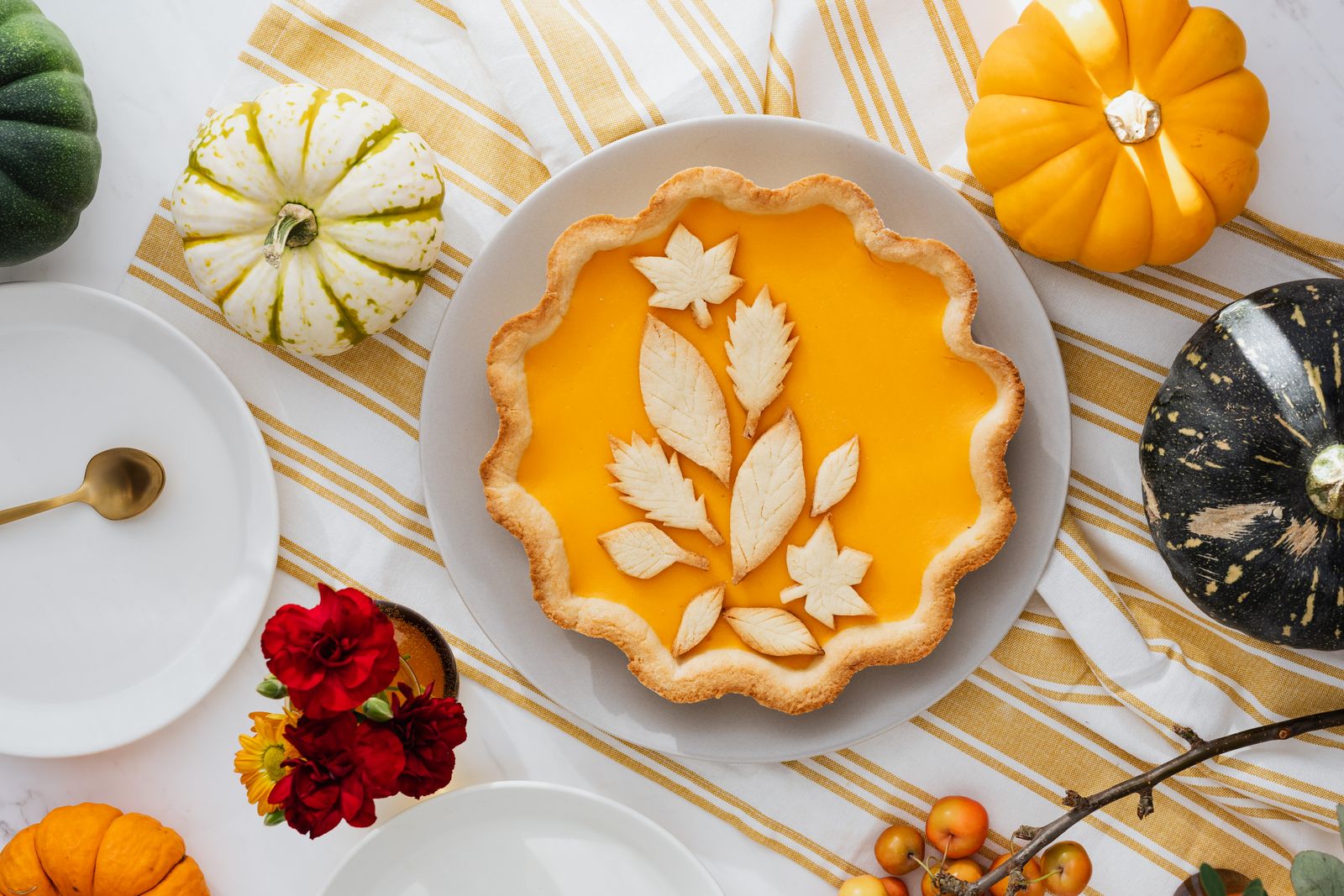
Searching for the best tarta de calabaza near me usually starts with a translation question: is this just the Spanish name for pumpkin pie? The answer is almost — but not quite. Tarta de calabaza is Spain’s pumpkin tart, a lighter, brighter cousin of the American pumpkin pie, and it is one of autumn’s best desserts.
It looks familiar, and regulars will tell you that is the point. This is Spanish home baking, and when it is made properly it is silky, gently spiced and unmistakably pumpkin.
What Is Tarta de Calabaza?
Tarta de calabaza translates simply as pumpkin tart, and it describes a family of preparations rather than one fixed recipe. The most common sweet version is a custard tart: pumpkin roasted or boiled and pureed, mixed with eggs, milk and sugar, poured into a shortcrust case and baked until set. Cinnamon is the usual spice, and citrus zest — lemon or orange — is the detail that sets the Spanish approach apart.
That citrus is what makes the difference. The best tarta de calabaza is generally lighter and less heavily spiced than the American pumpkin pie most people know, with the pumpkin flavour more prominent relative to the seasoning. Where the American version leans on cinnamon, nutmeg, clove and ginger, the Spanish version lets the pumpkin speak, lifted by a little zest and a dusting of cinnamon.
The same name covers other traditions too. In Valencia, the coca de calabaza is a cake-style version — pumpkin folded into a batter with olive oil, eggs and flour, baked in a tray and dusted with sugar and cinnamon. In Aragón, the empanadico is a traditional filled pumpkin pastry. And across Latin America, versions vary by country, some closer to flan, some made with condensed milk.
Do not confuse it with two related Spanish sweets. Cabello de ángel, angel hair, is a sweet preserve made from a specific squash variety and used as a pastry filling across Spain — genuinely distinct from pumpkin puree. Dulce de calabaza is a candied pumpkin preserve found across Latin America. Both are delicious, but neither is tarta de calabaza.
Where to Find the Best Tarta de Calabaza Near Me in Spain
If you are in Spain, the best tarta de calabaza is found in autumn, when pumpkins are in season and the tart appears in bakery windows across the country. Look for it from October through December, around All Saints’ Day and the autumn holidays.
- Neighbourhood pastelerías in Madrid and Barcelona — the classic route. Traditional bakeries in the old quarters bake it through the autumn, usually as a whole tart sold by the slice or to order.
- Cafés and bakeries in Valencia — the home of the coca de calabaza, where the cake-style version is the local form. Look for it in traditional horno bakeries, dusted with sugar and cinnamon.
- Aragón and the north — the empanadico tradition lives on in village bakeries, where the filled pumpkin pastry is a point of local pride.
- Markets in autumn — municipal markets in Madrid, Barcelona and Valencia sell whole pumpkins and often have bakery stalls with the tart ready-made, especially in the weeks around 1 November.
How to Find the Best Tarta de Calabaza Near Me Wherever You Are
Outside Spain, the search works the same way. Type “tarta de calabaza” or “Spanish bakery” into Google Maps and look for places that list the dish by name — then check the reviews for the dish itself.
Here is what to look for: the filling should be smooth and custardy, not stodgy; the pumpkin flavour should come through clearly, not buried under spice; there should be a hint of citrus; and the pastry should be crisp, not soggy. It is usually served in wedges at room temperature or slightly warm, often with coffee.
Watch out for the shortcuts. The worst versions are American pumpkin pie with a Spanish name — heavy on the spice mix, made from a tin, and sold all year round with no sense of the season. In the UK and the US, your best bet is a Spanish bakery or café in a city with a Spanish community — London, New York and Miami all have several — and a few Latin American bakeries make their own versions too, though those tend to be sweeter and closer to flan.
Best Tarta de Calabaza Near Me: What It Costs and When to Go
In Spain, expect to pay a few euros for a slice in a café, and roughly €12–18 for a whole tart from a bakery, depending on the size and the city. Outside Spain, a slice in a Spanish café usually costs a little more.
Autumn is the only time that matters. The tart is at its best from October to December, when pumpkins are in season and bakeries make it fresh. Some bakeries take orders for the whole tart — worth doing if you are feeding a table.
Tarta de calabaza is served all year round in some places, but it tastes best in the colder months. It is gentle, warming and unshowy, the kind of dessert that makes sense after a walk through a Spanish market in November. If you only try it once, try it in Spain, in autumn, from a neighbourhood bakery, with a coffee. And if you are anywhere else, the best tarta de calabaza near you is the one a Spanish kitchen bakes fresh, with real pumpkin, a little citrus and a crisp crust.
Can You Make Tarta de Calabaza at Home?
Yes. Roast a pumpkin until soft, then puree it until smooth. Whisk it with eggs, milk, sugar, a pinch of cinnamon and the zest of a lemon or an orange. Pour the mixture into a shortcrust case and bake at 180°C until the filling is just set, with a little jiggle in the centre. Let it cool before slicing, then serve at room temperature, dusted with icing sugar, with coffee.
Is Tarta de Calabaza Worth Trying?
Yes — once, properly. Do not judge it against American pumpkin pie; judge it by the first forkful, where the pumpkin comes through clean and bright. If you are in Spain in autumn, a neighbourhood pastelería is the slice to measure all others against.