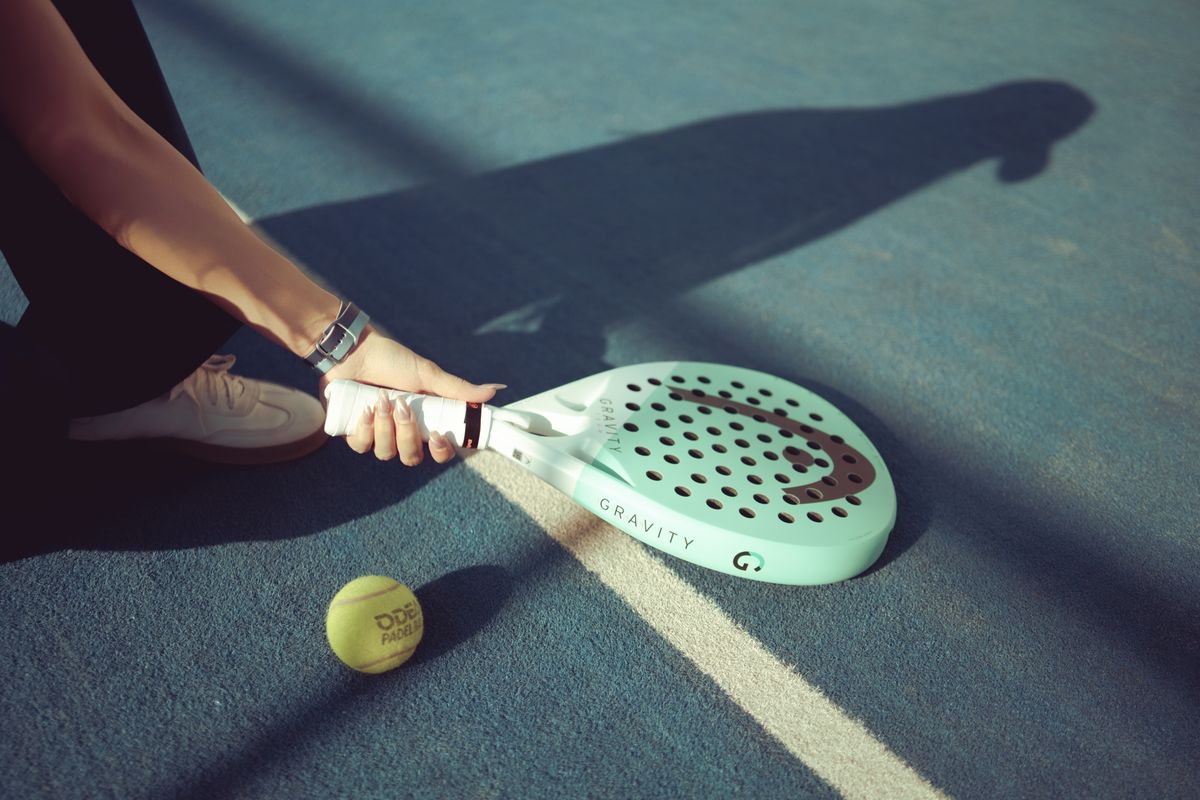
If you have noticed new glass-walled courts popping up at your local leisure centre, you have probably spotted padel. It is one of the fastest-growing sports in the UK, and for good reason: it is easy to learn, wonderfully social, and fun from the very first session.
Padel looks a little like tennis, borrows a trick or two from squash, and yet feels like something entirely its own. This guide explains what it is, how it works, and what you need for your first game.
What exactly is padel?
Padel is a racket sport played in doubles on a court roughly a third of the size of a tennis court, enclosed by glass walls and mesh fencing. Players use short, solid rackets with no strings, and a ball similar to a tennis ball, but slightly less bouncy.
The smaller court and slower ball make rallies longer and more forgiving than in tennis, which is a big part of its appeal. The game was first played in Mexico, grew hugely popular in Spain and Latin America, and has since spread across Europe.
How padel differs from tennis and squash
In tennis, the ball is hit over a net on a large open court, and powerful serves and long groundstrokes dominate. In padel, the serve is underarm, the court is enclosed, and the walls are part of the game — a ball that bounces off the back or side wall after landing in can still be played, much like in squash.
Squash is played against a front wall with both players sharing the same space, which can feel intense for beginners. Padel, by contrast, is played over a net with opponents on the other side, like tennis, so it feels more familiar.
The basic rules you need for your first game
Padel is always played in doubles, so you will have a partner beside you and two opponents across the net. At the start of a point, the server stands behind the service line and serves underarm, diagonally across the court, with the ball bouncing once before it is struck. The serve must land in the opposite service box.
Once the serve is in, the rally begins, and the walls come into play. A ball must bounce once on your opponent’s side before it can hit the glass or mesh; after that bounce, players may let it come off the wall and play it back.
What to wear and bring
One of the joys of padel is that you do not need much kit to start. Most clubs hire out rackets for a small fee, so you can try the sport before buying your own.
For clothing, wear what you would wear for any active sport: a comfortable top, shorts or leggings, and sports shoes with good grip. Court shoes or tennis shoes are ideal, because padel involves lots of short, sharp movements. Bring a water bottle, a small towel, and a spare top if you tend to work up a sweat. Clubs provide the balls.
| Padel | Tennis | Squash | |
|---|---|---|---|
| Players | Doubles | Singles or doubles | Singles or doubles |
| Court | Small, enclosed with glass walls | Large, open | Small, enclosed room |
| Racket | Short, solid, no strings | Long, strung | Long, strung |
| Serve | Underarm | Overarm | Underarm or overarm |
| Walls in play | Yes, after the bounce | No | Yes, central to the game |
Tips for your first session
Your first session will go best if you relax and focus on keeping the ball in play rather than trying to hit winners. Aim for the middle of the court, keep your racket up and ready, and move as a pair with your partner. A quick call of “mine” or “yours” avoids collisions and confusion.
Positioning matters more than power in padel. When your opponents are at the back of the court, move towards the net, where you can volley and control the rally. Embrace the social side too: games are usually followed by a drink or a chat, and clubs run social mixers.
Why padel is booming in the UK
Padel’s growth comes down to a simple combination: it is accessible, social and fun. Unlike some racket sports, where beginners can spend months struggling to sustain a rally, padel offers a proper game almost immediately, which keeps people coming back.
The doubles format also makes it a natural activity for friends, colleagues and families to enjoy together.
Frequently Asked Questions
Do I need to have played tennis to try padel? Not at all. Padel is designed to be beginner-friendly, and many people who have never played a racket sport pick it up quickly. The smaller court, underarm serve and slower ball make rallies easier to sustain than in tennis, and beginner sessions assume no previous experience.
What should I bring to my first padel session? Comfortable sports clothes, court shoes with good grip, a water bottle and a towel are the essentials. Most clubs hire out rackets and provide balls, so you do not need to buy any kit before your first game. Sunscreen is worth packing for outdoor courts.
Is padel played in singles as well as doubles? Padel is almost always played in doubles, and that is the standard format at clubs and in competitions. A few courts are built for singles, but they are rare, and the game is designed around two players per side working together.
Is padel a good workout? Yes. A typical game involves short sprints, quick changes of direction, volleys and plenty of movement, which adds up to a solid cardiovascular workout. Because the court is small, it is generally lower impact than some other racket sports, which suits a wide range of fitness levels.